
How to Arrange Medical Transportation for a Loved One in South Florida
June 12, 2026 · 5 min read
Reviewed by Blake Yturralde, paramedic and ETA co-founder
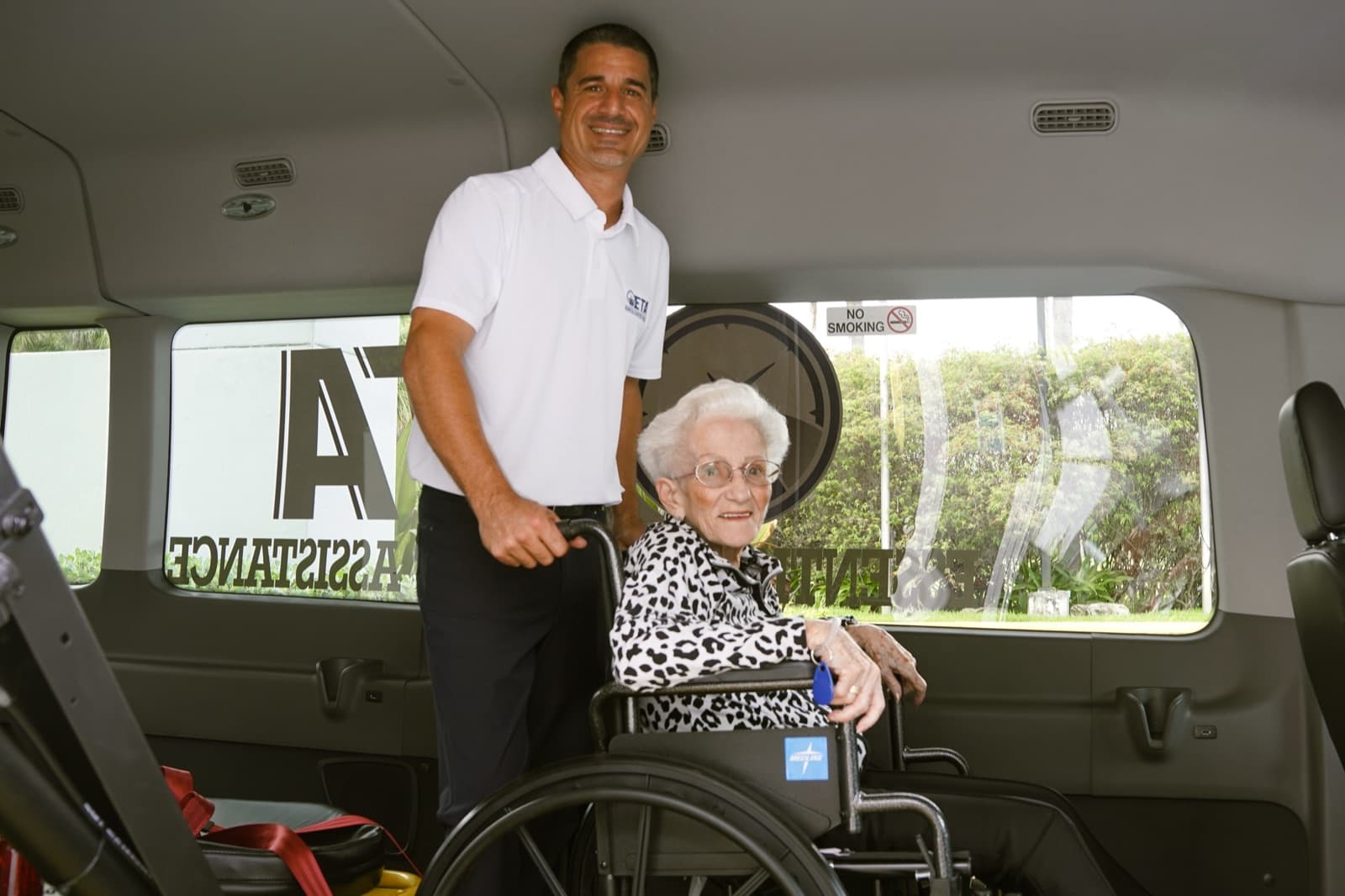
Coordinating transportation for an aging parent or loved one can feel overwhelming the first time. Break it into a few simple steps and it becomes much easier. Here's how families across South Florida do it.
1. Identify the level of help needed
Can your loved one walk with little assistance, do they use a wheelchair, or do they need to stay lying down? That decides whether you need ambulatory, wheelchair, or stretcher transport. If you're unsure, a good provider will help you figure it out over the phone, and our guide to choosing between wheelchair, stretcher, and ambulatory walks through the questions that settle it.
2. Gather the trip details
- Pickup address and destination (and any facility/room details)
- Date and appointment time
- Whether it's one-way or round-trip
- Mobility equipment (wheelchair, walker, oxygen, etc.)
- Whether a family member or caregiver will ride along
- Gate codes, building entrances, and which door to use at home
- The doctor's suite number or the department inside the hospital
- Anything the driver should know, like hearing loss or memory trouble
For a hospital discharge, add the room number, the expected discharge time, and the name of the nurse or case manager handling it. Discharge times slide, so a direct number for the unit helps everyone. Our discharge rides page explains how we coordinate that timing.
3. Decide how the ride will be paid for
South Florida families usually have several options, and it's worth checking them before you book:
- Florida Medicaid arranges rides through the member's health plan for members who have no other way to get to care. Plans generally want at least 24 hours' notice.
- Some Medicare Advantage plans include a ride benefit. Call the number on the member card to ask what's covered.
- Original Medicare covers an ambulance only when it's medically necessary. It doesn't pay for wheelchair vans or car rides.
- County paratransit (TOPS in Broward, Palm Tran Connection in Palm Beach, and STS in Miami-Dade) offers low fares for eligible riders, with shared rides, advance booking, and wider pickup windows.
- Private pay means you book directly with a company like ETA and get a fixed quote up front, with no eligibility rules or broker in between.
Our Medicare and Medicaid guide covers each option in detail, including the county programs. Private pay makes the most sense when the ride is short notice, when your loved one needs door-through-door help, or when the appointment can't wait for a shared ride.
4. Book ahead when you can
Scheduling in advance gives you the best choice of pickup times, especially for recurring trips like dialysis, where a standing order means you never have to rebook. Same-day requests are often possible too, so it never hurts to call.
Not sure when the appointment will end? Book the trip home as a will call and phone dispatch when your loved one is ready. With ETA, a will call costs the same as a regular one-way trip, and a driver usually arrives within about an hour.
5. Choose a provider you can trust
Look for licensed, insured providers with trained drivers, proper securement, and genuine door-through-door assistance. Not just curb-to-curb. Clear communication and on-time pickups matter most when someone's health is on the line. A few questions sort providers quickly:
- Is the price all-in, with tolls and the first minutes of waiting included, or will there be add-ons?
- Does the driver help door-through-door, or wait at the curb?
- Can a family member ride along, and is there a charge for it?
- Who answers the phone if the appointment runs late or plans change?
- Can they set up a standing schedule for recurring appointments?
For the record, here are ETA's answers. Tolls and the first 15 minutes of waiting are included. Door-through-door help and one family member riding along cost nothing extra. A real person answers dispatch 24 hours a day, and recurring rides run on a standing schedule. Local one-way rides start at $90 ambulatory, $110 wheelchair, and $220 stretcher.
6. Prepare your loved one for the ride
- A list of current medications and the doctor's name
- Photo ID and insurance cards for check-in
- A charged phone, plus your number written down in case it isn't
- A light sweater, because waiting rooms run cold
- Their walker or cane, glasses, and hearing aids
7. Stay in the loop from a distance
If you live out of town, name one family member as the contact for ride updates and give dispatch that number along with your loved one's. Ask how you'll hear about pickup and drop-off, and who to call if something changes. If your parent winters in Florida, our checklist for out-of-state family covers the rest.
8. Confirm and relax
Once your trip is confirmed, you'll have a pickup window and a single point of contact. Essential Transport Assistance serves Broward, Miami-Dade, and Palm Beach counties seven days a week. Call 954.477.7340 and we'll handle the details so you have one less thing to worry about.
Need a ride in South Florida?
Call our dispatch team or request a ride online. We serve Broward, Miami-Dade, and Palm Beach counties seven days a week.