
NEMT vs. Ambulance: Which Type of Medical Transport Do You Need?
June 16, 2026 · 4 min read
Reviewed by Blake Yturralde, paramedic and ETA co-founder
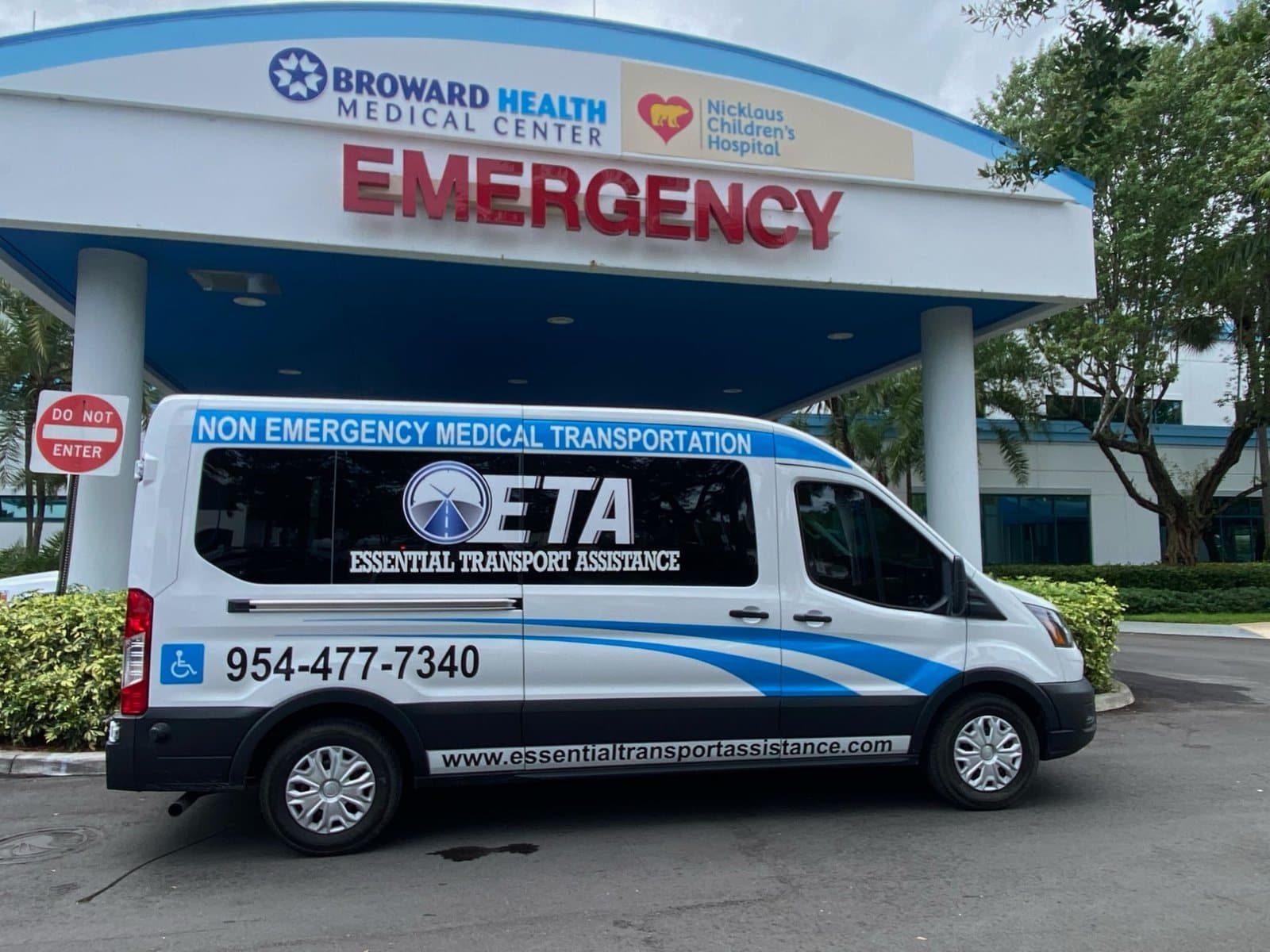
When a loved one needs help getting to medical care, it's not always obvious whether to call an ambulance or book non-emergency medical transportation (NEMT). Choosing the right one keeps everyone safe and can save you a great deal of money.
When you need an ambulance
Call 911 for an ambulance any time there's a medical emergency. Chest pain, difficulty breathing, severe bleeding, signs of a stroke, or any situation where someone needs medical care or monitoring during the trip. Ambulances are staffed and equipped to treat patients en route.
Stroke signs are worth knowing by heart: a drooping face, an arm that drifts down, slurred or strange speech. Call 911 right away and note the time the symptoms started. If you're ever unsure whether it's an emergency, call 911 and let the dispatcher decide. A scheduled ride is never the answer for someone who might be having one.
The middle ground: non-emergency ambulance or stretcher van?
Some scheduled trips still need an ambulance. If your loved one needs a medic's care during the ride, such as cardiac monitoring, IV medications, or suctioning, a non-emergency ambulance is the right call even though nothing is urgent. Discharge planners and doctors usually arrange these when the medical need is there.
A stretcher van covers everyone else who has to travel lying down: medically stable passengers who can't sit up after surgery, during recovery, or because they're bedbound. The crew handles the transfer and the ride, not medical treatment. That difference is also why a stretcher van costs less.
When NEMT is the right choice
Non-emergency medical transportation is for scheduled, non-urgent trips where the passenger is stable but still needs safe, assisted transport. There's no medical treatment needed during the ride. Just dependable, comfortable transportation with help getting in and out.
- Dialysis and recurring treatments
- Doctor and specialist appointments
- Hospital or rehab discharges back home
- Imaging, labs, and outpatient procedures
- Adult day care and assisted-living outings
The three types of NEMT
Most providers, including ETA, offer three levels of service so you only pay for what you need: ambulatory (for passengers who can walk with little help), wheelchair (lift-equipped vans with secured seating), and stretcher (for passengers who must remain lying down). Our guide to choosing between them helps you pick.
What Medicare pays for
Original Medicare covers ambulance rides when any other way of traveling could endanger your health. For scheduled trips, that generally means the patient is bed-confined: unable to get up from bed without help, unable to walk, and unable to sit in a chair or wheelchair. Repeat scheduled trips, such as dialysis by ambulance, also need a doctor's certification. When Medicare does cover the ambulance, you typically pay 20% after the Part B deductible.
Original Medicare doesn't pay for wheelchair vans or car rides, even to medical appointments. Some Medicare Advantage plans and Florida Medicaid do cover non-emergency rides, and our guide to Medicare and Medicaid transportation explains the options.
The cost difference
Ambulances are expensive and meant for emergencies. For a non-emergency trip, NEMT is dramatically more affordable and often more comfortable, with door-through-door assistance an ambulance simply isn't designed to provide. If it's not an emergency, NEMT is almost always the better fit.
With Essential Transport Assistance, local one-way rides start at $90 ambulatory, $110 wheelchair, and $220 stretcher, with tolls included and the full price quoted before you book. See what medical transportation costs in South Florida for what moves the price.
Hospital discharges
Discharge is where families most often face this choice. If the patient is stable and only needs help getting home, a wheelchair van or stretcher van is usually all it takes, and the case manager can tell you which level fits. Patients who had sedation generally can't be released to a rideshare driver alone. Our hospital discharge page explains how we coordinate the timing with the nurse or case manager.
A quick way to decide
- Is it an emergency, or could it become one on the way? Call 911.
- Does the patient need medical care or monitoring during the ride? Book a non-emergency ambulance.
- Stable but can't sit up for the trip? Stretcher van.
- Can sit up but can't walk safely? Wheelchair van.
- Can walk with a steady hand? Ambulatory ride.
Essential Transport Assistance was co-founded by a paramedic with more than 20 years in ER and critical care, and we'll tell you plainly if a trip needs an ambulance instead. If you're not sure which ride fits, call 954.477.7340 and we'll talk it through.
Need a ride in South Florida?
Call our dispatch team or request a ride online. We serve Broward, Miami-Dade, and Palm Beach counties seven days a week.