
Wheelchair, Stretcher, or Ambulatory: Choosing the Right Medical Transport
June 9, 2026 · 4 min read
Reviewed by Blake Yturralde, paramedic and ETA co-founder
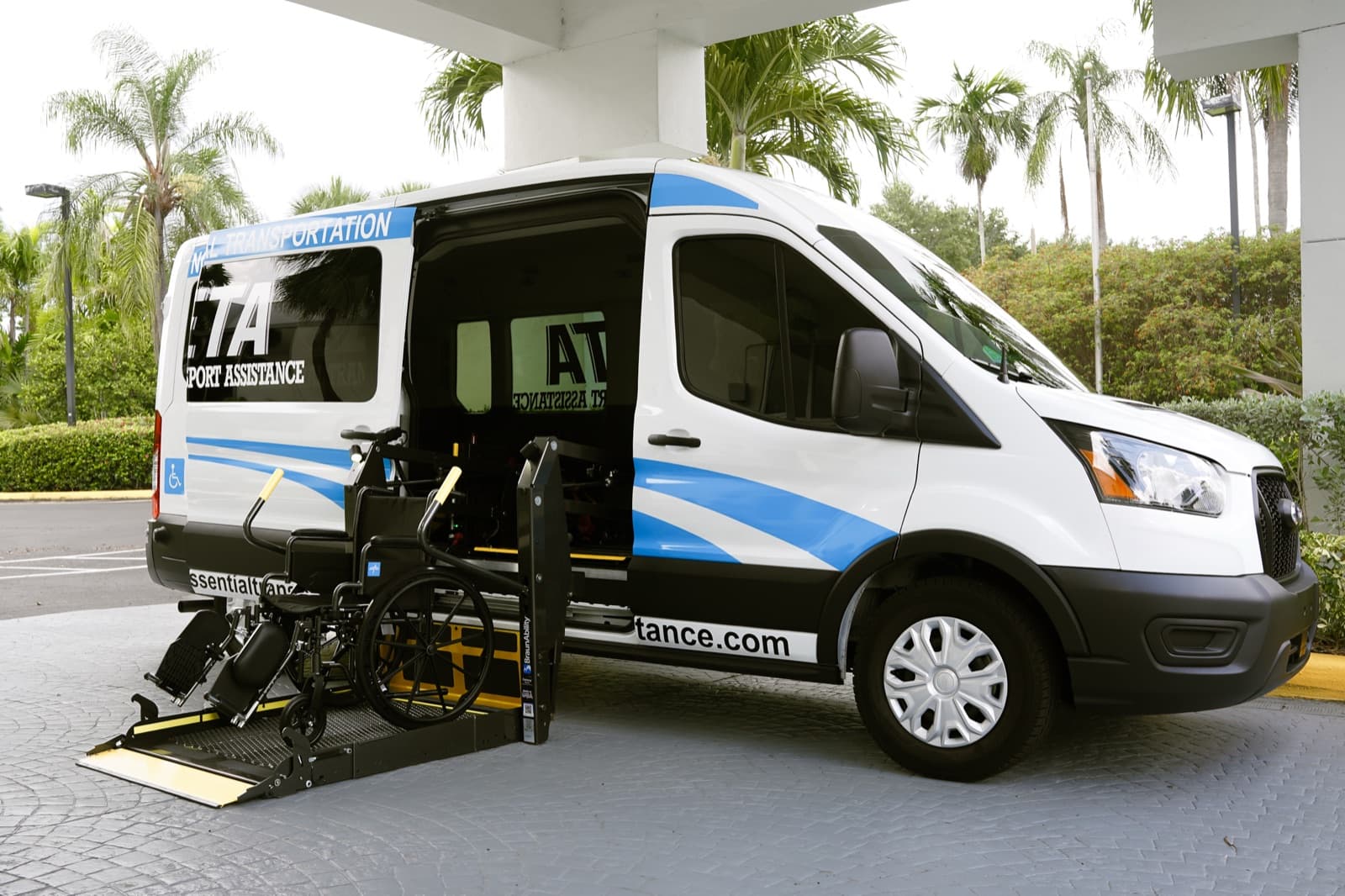
Non-emergency medical transport comes in three main levels of service. Picking the right one keeps the trip safe and comfortable, and means you only pay for the help that's actually needed. Here's how to tell which one your loved one needs.
The quick answer
- Walks on their own or with a cane or walker, and can sit in a regular car seat: ambulatory.
- Can't walk safely but can sit upright in a wheelchair for the whole ride: wheelchair.
- Can't sit up for the length of the trip, or has to stay lying flat: stretcher.
In medical transportation, ambulatory just means able to walk. Wheelchair and stretcher passengers are called non-ambulatory. If none of these sounds quite right, that's normal too. Most families simply describe how their loved one gets around the house, and dispatch matches the ride to it.
Ambulatory transport
Best for passengers who can walk with little or no assistance and can get in and out of a vehicle with a steadying hand. It's a courteous, professional ambulatory ride to appointments, discharges, and errands. Ideal when mobility is only mildly limited.
With ETA, a local one-way ambulatory ride starts at $90. The driver offers an arm at the curb and, if you ask, walks your loved one from inside the house to the check-in desk at no extra charge. A walker or cane comes along, and so can one family member.
Wheelchair transport
For passengers who use a wheelchair, lift-equipped vans let them stay in their own chair, which is then secured with a four-point system. Trained attendants provide door-through-door help, so no one has to navigate ramps or doorways alone.
Wheelchair transport is also the safer choice for someone who can take a few steps at home but tires quickly, feels unsteady standing, or can't manage the step up into a vehicle. Power wheelchairs and scooters can ride too in most cases, so tell dispatch the type of chair when you book. Local one-way wheelchair rides start at $110.
Stretcher transport
When a passenger can't sit up for the trip, often after surgery, during recovery, or because they're bedbound, stretcher transport lets them travel lying down, with a trained two-person crew handling the bed-to-bed transfer at both ends.
A stretcher van isn't an ambulance. It's the right fit for someone who is medically stable and simply needs to stay flat. If your loved one needs medical care, monitoring, or medication during the ride, that's an ambulance trip, and our guide to NEMT vs. ambulance explains where the line falls. Local one-way stretcher rides start at $220.
Questions that settle it
If you're on the fence, these questions usually decide it:
- Can they walk from the front door to the car without someone holding them up?
- Can they step up into a van or lower themselves into a car seat?
- Can they sit upright for the whole ride, traffic included? A trip from Boca Raton to Miami can take an hour or more.
- Do they need to stay in their own wheelchair?
- Are there steps at home or at the destination?
- Will they be groggy after sedation, or weaker than usual after a hospital stay?
If the answer to either of the first two is no, start with wheelchair transport. If sitting up for the ride is the problem, choose stretcher. Steps at either end are worth mentioning too, because they change how the crew plans the pickup.
When the right level changes
Needs change, especially around a surgery or a hospital stay. A parent may go home from the hospital on a stretcher, ride to therapy in a wheelchair a few weeks later, and be back to ambulatory rides by the end of recovery. Tell dispatch when things change and we'll send the level of service that fits that day. For a standing schedule like dialysis or therapy, we update the order instead of making you rebook.
What each level costs
Local one-way rides with Essential Transport Assistance start at $90 ambulatory, $110 wheelchair, and $220 stretcher, and every quote includes tolls. Distance, a round trip, waiting beyond the first 15 free minutes, stairs, and nights, weekends, or holidays change the price, and all of it is in the quote before you book. Our guide to what medical transportation costs in South Florida goes through it in detail.
Still not sure?
That's completely normal. Tell our dispatch team about your loved one's mobility and the appointment, and we'll recommend the right level of service. Essential Transport Assistance offers all three across South Florida. Call 954.477.7340 and we'll help you choose.
Need a ride in South Florida?
Call our dispatch team or request a ride online. We serve Broward, Miami-Dade, and Palm Beach counties seven days a week.